All Flourishing is Mutual
Rejecting the mathematics of worthiness
During the first weeks of the pandemic in 2020, I started reading Braiding Sweetgrass by Robin Wall Kimmerer. Though now the book has reached nearly universal acclaim, at the time it had been sitting on my “to be read” pile for a year or so. With all the extra time I suddenly had, it seemed like a good time to begin.
Just a few pages in, the sacramental energy of Kimmerer’s writing caught my breath. She writes: “The trees act not as individuals, but somehow as a collective. Exactly how they do this, we don't yet know. But what we see is the power of unity. What happens to one happens to us all. We can starve together or feast together. All flourishing is mutual.”
At that very moment, I was “social distancing” in my house, avoiding all other people (aside from my husband). I was watching a global pandemic unfurl in real time through my various screens. I listened to reports of refrigerated containers set up outside of hospitals. These were necessary to increase the carrying capacity of the hospital’s morgue. We were wiping down our groceries and side-eyeing other people in the store or on the sidewalk, on high alert for coughs and throat-clears. We were hosting video calls with friends and family because we could not gather to process the fear and tragedy together.
We were all existential threats to each other; or at least our biology was. If my neighbor is healthy, then I am healthy. At that moment, mutual flourishing meant staying as far away from each other as possible.
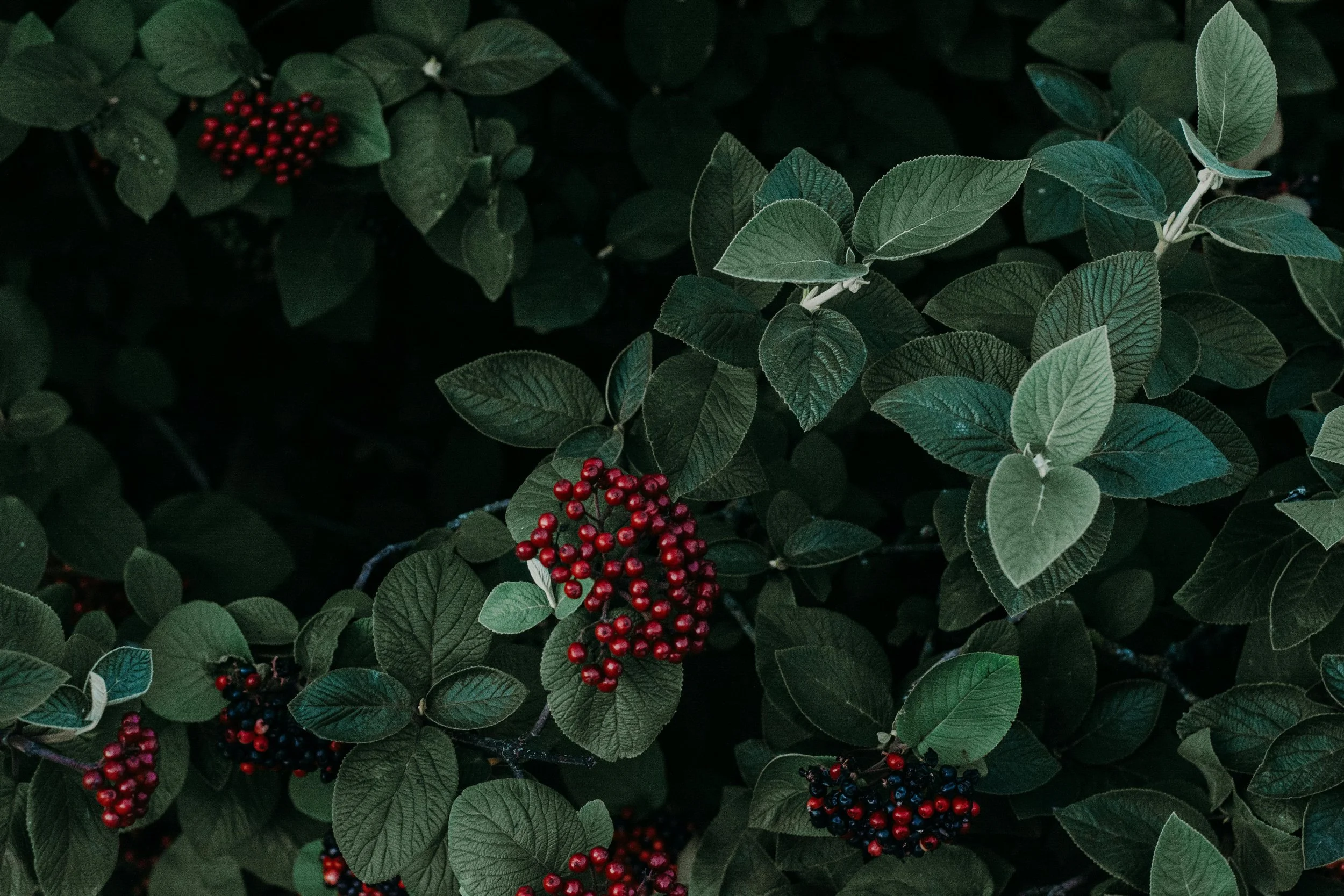
Photo by Irina Iriser
But as the pandemic wore on much longer than the two weeks we initially thought it would be, it was clear that some would be sacrificed, in mind if not body. They would work cheek-to-jowl in meat processing plants, in grocery stores, in restaurants turned takeout hubs, in hospitals, and in so many other places so that the rest of us could continue living. Even if that life had been diminished to the few rectangles of a Zoom screen.
As the people who worked those jobs began to burn out or die, we faced shortages of all kinds: non-Covid (and eventually Covid-related) health care, toilet paper, meat, cleaning supplies. The people who had worked all kinds of other jobs like construction, hair styling, retail, and so many other kinds of work that require in-person and hands-on attention faced shortages of their own as their businesses quickly contracted. Those of us, like myself, who were technology-enabled “knowledge” workers were, by a large margin, the most safe. But many of us soon faced widespread layoffs as the economy cratered from the inside out.
An economy is vast system of interconnected exchange, not unlike the grove of trees Kimmerer was describing in her book. Suddenly and violently removing parts of that exchange causes system collapse. And not just of the grove, but of all the supporting and reliant organisms in that ecosystem. All flourishing is mutual.
In the spring of 2021, the Covid vaccine was finally available to the general population after first being reserved for the most vulnerable.
We learned that while vaccines offer good protection for the individual, for the vaccines to be as effective as possible, we needed enough people to get the vaccine to reach “herd immunity.” That is, the more people who get it, the more we protect not just ourselves, but each other. This was especially important to those who needed as much protection as they could get—the elderly, the immuno-compromised, and others who have a high level of exposure due to their jobs.
I remember going to the Hynes Convention Center in Boston to get my first jab and feeling a sense of hope and renewal brimming within me. And not only because I was protecting myself from the virus, but because I believed it was the beginning of our re-communion as a society and return to normal life.
As it turned out, I was both right and wrong simultaneously.
More recently, Kimmerer has published The Serviceberry: Abundance and Reciprocity in the Natural World. The extended essay first appeared in Emergence Magazine3 and this compact volume features gorgeous illustrations from artist John Burgoyne.
In this book, Kimmerer upholds the serviceberry as a parable of what she describes as the “gift economy”—a circulation of resources devoid of financial speculation or even profit motive. This time, I only got to page two before I felt the gut punch of Kimmerer’s simple yet profound prose: “This abundance of berries feels like a pure gift from the land…There is no mathematics of worthiness that reckons I deserve them in any way.”
The “mathematics of worthiness” is phrase that has stalked my imagination since I first read those words. There are so many ways we are measured precisely so that some arbiter of worthiness (now just as likely to be AI as a human being) can decide what you are entitled to: grades, SAT scores, 1-through-5 performance ratings, your credit score, BMI, age, income—to name just a few. There are ways we are evaluated that are hidden within in algorithms and databases that we aren’t even aware of, yet they determine our access to health care, government services, financial privileges, job opportunities, and perhaps even our sense of self-worth and purpose.
In contrast, the gift economy is not merely an accounting of entitlements distributed by some authority or higher power. It is upheld by the interconnection of co-equal relationships. Kimmerer writes: “Receiving a gift from the land is coupled to attached responsibilities of sharing, respect, reciprocity, and gratitude—of which you will be reminded…my life is contingent upon the lives of others, without whom I simply would not exist.”
The lesson we should have learned from the pandemic was that my neighbor's health and well-being directly impacts my health and well-being. My neighbor's access to work and income impacts my access to work and income. Even the very concept of “neighbor” needs expansion and modernization to include the national and global networks of relationships and trade that reach into even the most remote areas of the world. There are no walled gardens, as much as we might try to build them behind gated communities, or resistance to affordable housing, and in the many other permutations of exclusionary politics.
When we refuse to recognize our own interdependence, we can mistakenly believe that our lot in life is due solely (or even mainly) to our personal attributes and capacity for work. And when those with even moderate wealth and power underestimate the extent to which luck and privilege have helped them attain those gifts, what should be rightfully considered a reciprocal responsibility is reduced to obligation and charity. Kimmerer writes: “If our first response to the receipt of gifts is gratitude, then our second is reciprocity, to give a gift in return.”
Absent that sense of reciprocity, we have substituted this mathematics of worthiness. Anyone in the working class (meaning anyone who must live from their wages vs. their investments) must continuously prove ourselves to be worthy (if not exceptional) to access the basic elements of a good life: healthcare, housing, education, dignified labor, child and elder care, and even respect.
Yet being wealthy is proof in itself of this worth in our current society. Another tax break, another loophole, another bailout for the investment class while we means test social safety net programs into oblivion to make sure single parents and elderly people aren’t getting more than they “should.” It’s a system that allows the executives at companies like Amazon and Walmart to accumulate billions while their workers are paid so little that thousands of them qualify for public assistance (paid for by the rest of us) just so they can eat. It’s a system that considers that dynamic a begrudging charity instead of exploitation.
To reject the mathematics of worthiness, we must abandon the very concept of earning approval or validation in order to access the basics of human life. What we need instead is a philosophy of belonging—an ideology that affirms, explicitly and unequivocally, that all flourishing is mutual. We must reject a system designed to divide us by obscuring that truth.
This philosophy recognizes that abundance is a cooperative state of being—and that any individual definition of abundance is, by nature, precarious. Individual accumulation is a lonely endeavor.
You will have what you need as long as your neighbor does too. “Recognizing ‘enoughness’ is a radical act in an economy that is always urging us to consume more,” Kimmerer writes.
I think that’s what we’re all searching for in the end: to have enough. To be enough. What seems like an individual quest is, in truth, a collective project. To seek enough is to seek each other, because no one flourishes alone.