The Erosion of Solitude and the Absence of Belonging
The Politics of Loneliness in an Authoritarian Age
When Hannah Arendt shared the insight in 1951 that loneliness is a precondition for totalitarianism,TVs were only in half of American households.
Less than 40 years later, critics like Robert Putnam and Neil Postman were warning that ever-increasing levels of TV consumption had so decreased family and civic engagement and increased loneliness, that we were on a Huxleyan slide into spiritual and cultural crisis.
All this before Mark Zuckerberg was out of diapers. Now we’re debating whether the compounding cultural and political crises of today are Orwellian or Huxleyan in nature (the correct answer is both) and Arendt’s observations remain chillingly relevant three quarters of a century later.
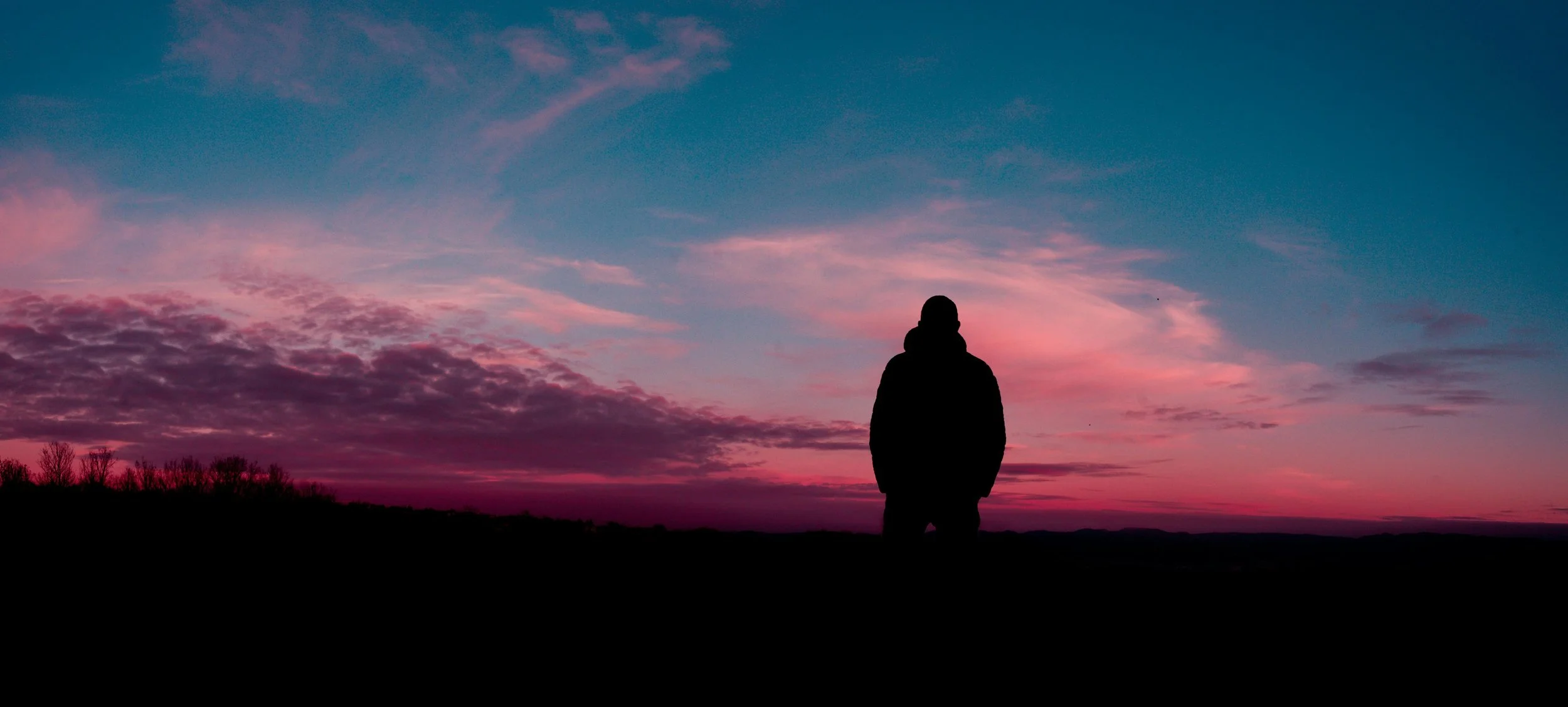
Photo by Rakicevic Nenad
Importantly, Arendt specified loneliness as distinct from solitude. Solitude is about removing distractions and reconnecting with the self. It is necessary for creativity, reflection, and a rich interior life. Loneliness, on the other hand, is about alienation, emotional severance, and an abandonment of belonging and reciprocity—individual conditions that have massive social impacts when captured and redirected at scale.
Today we have far too little solitude and far too much loneliness. The attention economy (and it’s little brother, productivity culture) steals the former and stokes the latter by monetizing outrage and performative behavior.
Genuine connection has been replaced by Potemkin villages of community (under the guise of “connecting the world”) to our great distraction. And what the power brokers have deliberately engineered for maximum captivation has been busy extracting our data, our thoughts, our words, our art, and our skills so that the human brain can be replaced by (they believe) something artificial.
The constant stimulation of hot takes and the amplification of fringe opinions (of real people or just as likely malicious bots) is so loud it erodes our discernment and dulls our inner voice. In short, it destroys our ability to think, which is a trend that AI boosterism seems hellbent to continue.
Because consumption—either of material goods or the endless flow of hyper-targeted digital “content”—has become our primary mode, our ability and even our appetite for independent thought is overwhelmed. It is in this space—lonely, unsure of reality, easily manipulated—that authoritarian (and perhaps totalitarian) regimes fill the void to find the means to their own ends.
Consumption, by definition, is passive; creation is active. Creativity, the act of making something out of nothing, requires sui generis cognition or intuition. Solitude or stillness or perhaps Jenny Odell’s definition of “doing nothing” is a precondition for creation. As Odell points out, doing nothing can’t be monetized, which is why it is now in such short supply.
The irony of social media is that it’s transmogrified into something deeply anti-social. The irony of “generative” AI is that it is neither generative nor intelligent; it is a derivative probability machine that seeks to further alienate us from what is real and what is not.
I am deeply concerned that the further entwining of social media and AI will birth even more pernicious forms of isolation, disorientation, and disassociation. As sociobiologist and Harvard professor E.O. Wilson observed in 2009, “The real problem of humanity is the following: We have Paleolithic emotions, medieval institutions, and godlike technology.”
Because this godlike technology of distraction and disconnection are deliberately designed to be both addictive and deeply embedded in daily life—backed by billions and billions in disproportionate investment—our capitulation to authoritarianism and our further collapse into a pit of unreality may seem inevitable. Yet the despair of inevitability is the illusion this apparatus depends on.
So what’s a human to do? I offer three practices that might give your brain and body a fighting chance at retaining your personhood and maybe your grip on reality.
The first is to practice refusal. This might be the most difficult observance (as anyone who’s tried to maintain a diet will tell you) but there’s a reason I frame these as practices and not pronouncements.
Refusal looks like deliberately making different choices, particularly when you notice you’re being guided (or man-handled) toward “frictionless” behaviors that are misaligned with your values or wellbeing. The endless scroll and autoplay are examples. Total social media or digital abstinence is not possible (or perhaps even desirable) for many people, but creating boundaries—and adhering to them—is one way to refuse complete submission to the digital ecosystem’s “success metrics.”
Another example might be to see if you can get creative with a pantry meal instead of automatically reaching for your delivery app or looking up a recipe to follow. A third example might be to learn the telltale signs of AI text and images and refuse to engage with them. Essentially any time you can escape your screen and propel yourself back into real life is a win.
The second practice is to seek solitude, which is another way of describing the time you give yourself to think outside of external opinions or various hot takes. This can look like a contemplative or spiritual practice like meditation or journaling, immersing yourself in nature such as on a walk or hike, or engaging with analog text or art. I switched back to physical books a long time ago, but something I’m beginning to re-explore is listening to music via CDs instead of streaming.
One of my personal favorites is the age-old pastime (perfected by Parisians) of cafe loitering and people watching. It could even mean just going to a movie or a restaurant without looking up reviews or ratings first.
Solitude is about giving your brain the space to familiarize yourself with your own thoughts, opinions, and desires. Julia Cameron’s concept of the “artist date” is informative here.
The third practice is to seek genuine, in-person connection and belonging. Our tech and political overlords have made it easier than ever for (some of) us to live sanitized, individualistic lives free from minor inconveniences. But there’s a hollowness to that type of solipsistic life, both individually and societally.
If we are partnered, it also places a lot of pressure on our partners who are often doing the work (physical, mental, and emotional) that was once carried by an entire community. And if you’re unpartnered, you can forgo that kind of support entirely.
The thing about connection, though, is that is dependent on a gentle form of reciprocity. You must give in order to receive. That means showing up consistently; sometimes it means doing things are inconvenient or when you are tired or when conditions are otherwise imperfect.
For example, I belong to several book clubs. Sometimes, I don’t finish the book before the club meets. I go anyway and find I enjoy the discussion and can contribute to it just fine. Sometimes I’m just tired at the end of the day and I don’t want to go to a crafting meetup. But I find I am always glad that I went once I get over the inertia of getting there.
Paying attention to how you feel during and after an activity can help motivate you. For example, you could use that time to scroll on your phone or go to that board game night or cooking class. Which one do you think you will feel more or less energized afterwards? Which one do you think contributes more to your sense of wellbeing?
Two of these offerings are deliberately self-contained and focused on listening for and to your own voice. The third is about how you interact with the people around you in physical space and synchronous time. Though I deliberately chose examples that are apolitical (a useful start, in my opinion), collective action can and should be a part of how you show up in your community.
Once you start noticing how you feel in relation to your choices regarding algorithm-fueled digital media, time spent within your own thoughts, and time connecting with others it becomes easier to choose the thing that fills you up instead of drains you. And then those choices hopefully become habit.
These practices take forethought and energy because the digital world is designed to extract our attention to the increase the accumulation of profit and powerful for the already wealthy and influential.
If loneliness is indeed a precondition for authoritarianism, then reclaiming solitude and connection from the digital domination apparatus isn’t just about personal wellness—it’s also a civic and moral necessity. Every time you can rescue yourself from the internet rabbit hole, each time you choose creativity over passivity, each gesture of belonging is a form of resistance. It’s how we remember what it feels like to be fully human in an age determined to make us forget.