Lilac Nostalgia
Heart-leaves of lilac all over New England
If you are in New England in May, you can often estimate how many centuries a home has inhabited that property by the presence and size of the lilacs there, even if the current house appears to be modern. Lilacs can live for hundreds of years; they are hardy through cold and heat and drought—and can grow up to 20 feet tall.
Or you just might come across a grove of lilacs near a crumbled stonewall while on a hike. The people who once inhabited these old homesites planted the non-native shrubs in the 18th or 19th centuries before these homesteads were deserted and reabsorbed by the forest. The first recorded lilac in New England was imported from (old) England in 1750 to the Portsmouth, NH home of the then-colony’s governor. Lilacs grew even more in popularity in the late 1800s with the introduction of French cultivars.
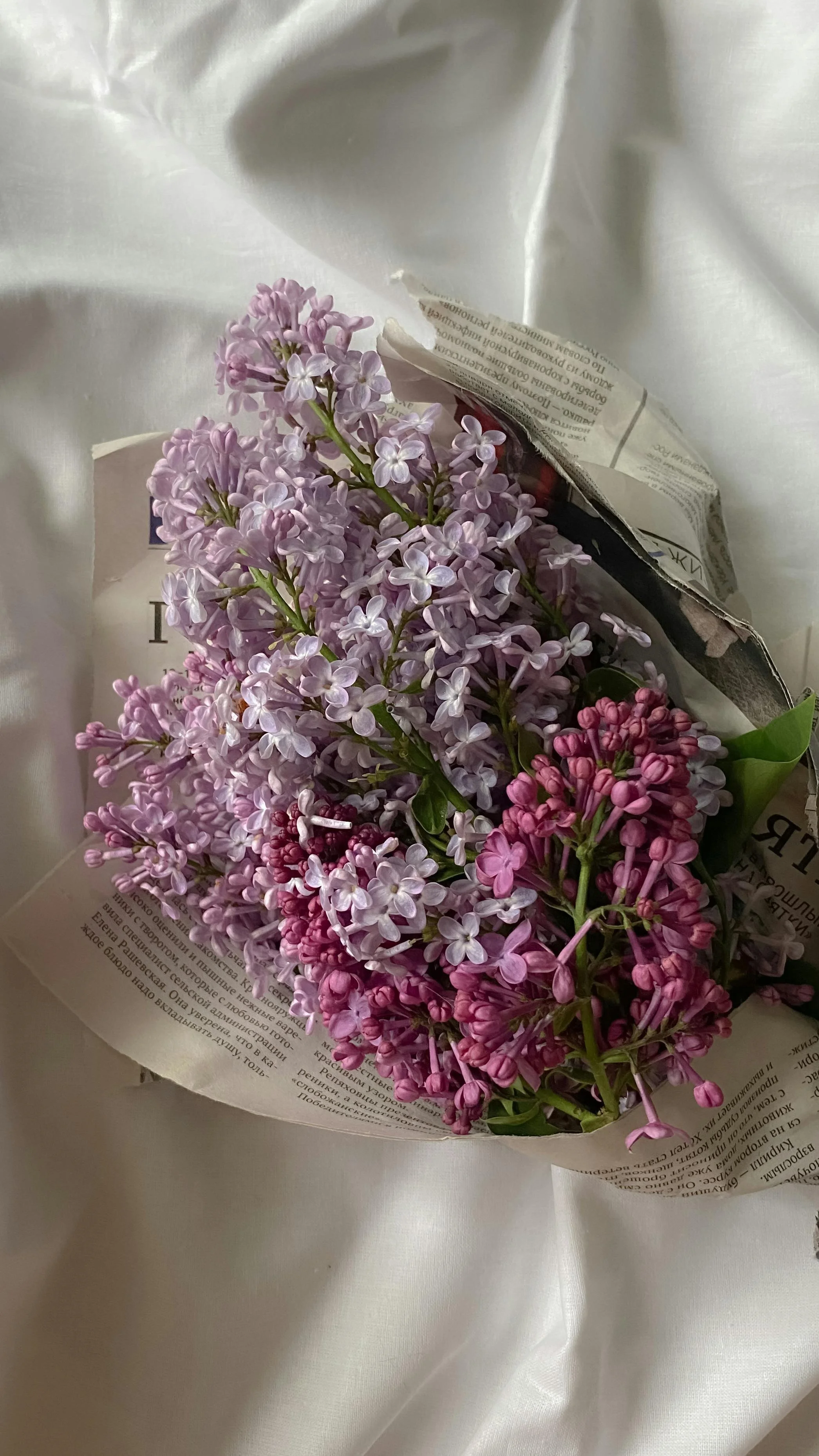
Photo by Karina Kholina
Many people associate lilacs with their mothers and grandmothers because of this deep association with home and roots and history. I am no exception. My mother and both of my grandmothers had lilacs. Growing up, I lived on the same street as one of my grandmothers and when visiting had to pass through a lilac tunnel that connected her yard to ours.
It’s not enough to enjoy them outside.
In fact, the women in my family love lilacs so much one even committed an international crime for the love of lilac. When she was an old woman, my mother’s mother’s mother drove all the way from Massachusetts to Prince Edward Island in Canada to visit the place of her family’s farm, many decades since abandoned. She pinpointed the location by finding the stone that had laid beneath the house’s long disintegrated door. Nearby, was the lilac stand. She dug up some plants, brought them back to the US with her by hiding them under a blanket, and replanted them in her in the yard of the house in Lynn, MA she was so proud to own. Every few years or so I drive by the house that belonged to my great grandmother—one that I remember visiting as a very small child—and those lilacs are there still.
The lilacs that stood in my grandmother’s and mother’s yards were cuttings from these plants. So lilacs had to be the first thing I planted once I had a yard of my own. Home isn’t home unless there are lilacs. May isn’t May unless I can bury my nose in those small, soft blooms.
As Amy Lowell wrote in “Lilacs”:
May is full light wind of lilacFrom Canada to Narragansett Bay.Lilacs,False blue,White,Purple,Color of lilac.Heart-leaves of lilac all over New England,Roots of lilac under all the soil of New England,Lilac in me because I am New England,Because my roots are in it,Because my leaves are of it,Because my flowers are for it,Because it is my countryAnd I speak to it of itselfAnd sing of it with my own voiceSince certainly it is mine.Lilacs feel of and for me with the love of them rooting back generations, just as New England does. Right after I turned 18, I rushed to do the most rebellious thing I could think of—get a tattoo. Perhaps it goes without saying that this occurred after years of dutiful studying and athletic and academic achievement. At 18, I chose a small, green shamrock from the book of rote designs. It had and still has meaning, but it was certainly not unique. Now fast approaching middle age, I have half a mind to transform that uninspired choice into a lilac bunch with green, heart-shaped leaves.
Lilac Adventures
The time for lilacs is quite short—usually about 2 weeks from bloom burst to spent flower. It’s ephemeral nature makes it all the more precious. Their essence is notoriously difficult to capture, though this perfume that I wear all May-long comes very close.
To stretch out the season as long as possible, I’ll infuse honey or simple syrup with lilac flowers. My husband, who is becoming quite the cocktail expert, made this gin sour for me using the lilac syrup, lemon juice, and a combination of two gins: Hendrick’s Flora Adora and Empress 1908.
Enjoy this with the windows open on a soft May evening while the sky turns periwinkle and the breeze blows in the scent of of the lilacs still on the branches outside.
Harvard’s Arnold Arboretum hosts Lilac Sunday every Mother’s Day. It can get very busy, so I often will treat myself to a Lilac Friday a few days before.
Lilacland in Pelham, MA
Pineland Farms in New Gloucester, Maine
The Ferriday Lilac Collection in Connecticut
Mount Auburn Cemetery (where Amy Lowell is buried) is the first “garden” cemetery in the US and has many lilacs. I haven’t been here during lilac season yet but I am curious to know if any are near Amy’s resting place.
Lady Moody Lilac Garden in Swampscott, MA